How to Introduce a Puppy to an Older Dog?
Learn how to introduce a puppy to an older dog step by step — from neutral parallel walks and reading body language to handling growls calmly and protecting your senior dog's space.

Bringing home a puppy is thrilling — yet if you already share your home with an adult or senior dog, it's completely natural to wonder how they'll get along. Your older companion relies on a predictable daily rhythm, quiet napping spots, and your familiar attention, all of which an exuberant puppy can turn upside down overnight.
The encouraging news? A thoughtful, step-by-step puppy and older dog introduction sets both dogs up to feel safe, respected, and unhurried. Start by honoring your resident dog's temperament and physical comfort, keeping their core routines steady, and supervising early meetings closely.
Before pickup day, double-check that both dogs wear properly fitted collars with up-to-date smart dog ID tags. Extra trips through front doors and backyard gates during a new arrival are prime moments for an overwhelmed puppy or startled adult dog to slip outside.
Can an Older Dog and a Puppy Live Together?
Yes — an older dog and a puppy can live together happily when introductions happen gradually, boundaries are protected, and neither dog is forced into close contact before they're ready. As the American Kennel Club notes, success comes down to matching supervision to your older dog's health, energy level, and personal space needs so positive experiences accumulate over time.
What to Consider Before Bringing a Puppy Home
Before welcoming a second dog, weigh a few practical household factors so both dogs thrive:
Your Older Dog's Temperament and Health
Notice how your adult dog responds to unfamiliar dogs on walks or with visiting pets. Just as importantly, schedule a wellness check if your dog is entering their senior years — VCA Animal Hospitals highlights that arthritis, stiff hips, or dimming vision and hearing can make sudden puppy pouncing painful or startling.
Energy Mismatch and Rest Needs
Puppies alternate between bursts of needle-toothed play and deep naps, whereas older dogs value calm predictability. Plan upfront how you'll channel puppy energy through playpens, chew enrichment, and short training sessions rather than expecting your older dog to entertain them.
Your Time and Daily Routine
Keep your resident dog's walk times, meal schedule, and one-on-one couch cuddles intact so the puppy's arrival doesn't feel like losing you.
Separate Space and Resources
Set up distinct sleeping zones, separate feeding spots, and baby gates or exercise pens before the puppy arrives. Put cherished chew bones and favorite plush toys away during shared floor time to prevent resource guarding.
Safety and Pet Identification
Equipping both dogs with QR smart tags linked to their digital pet profiles adds peace of mind while household doors open and close more often during puppy potty breaks.
Prepare Your Home Before the Puppy Arrives
- Swap scents ahead of time: Let your older dog casually sniff a blanket or soft toy carrying the puppy's scent before face-to-face introductions.
- Pick a quiet arrival window: Avoid chaotic evenings or houseguests; choose a calm morning or afternoon when two adults are available to handle one leash each.
- Clear tight bottlenecks: Open up narrow entryways and hallways so neither dog ever feels cornered.
- Keep family greetings low-key: High-pitched excitement raises arousal in both dogs.
- Set up puppy-free retreat zones: Install baby gates so your adult dog always has a quiet bedroom or sofa spot the puppy cannot reach.
- Inspect yard fences and latches: Tiny puppies squeeze through surprisingly narrow deck and gate gaps.
How to Introduce a Puppy to an Older Dog for the First Time
When introducing a new puppy to an older dog, follow these six calm steps to make their first impression relaxed and positive:
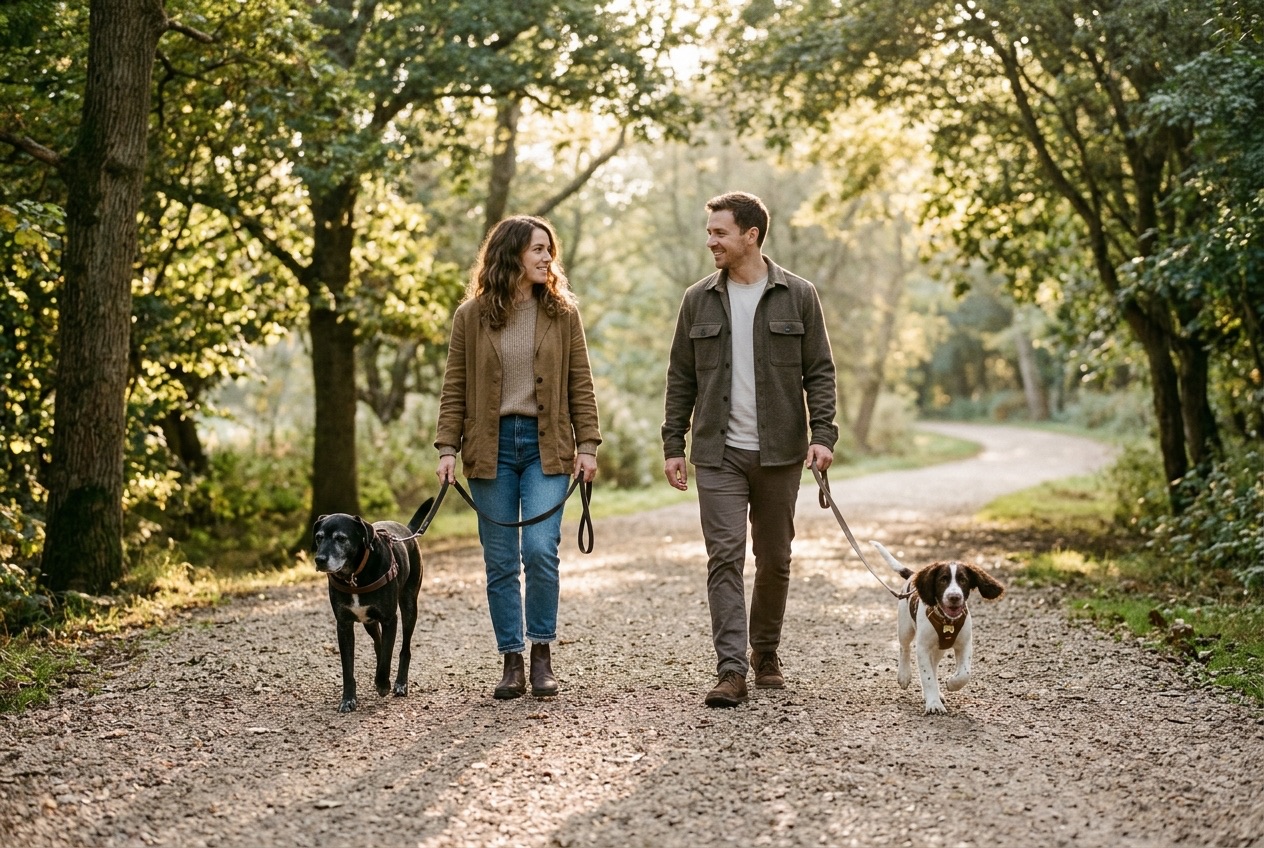
1. Choose a Neutral Outdoor Meeting Spot
Meet in a quiet, open outdoor area that neither dog considers personal territory — such as a calm neighborhood greenbelt or a friend's fenced yard (confirming your puppy's vet-advised vaccination precautions). Keep both dogs on flat leashes with separate handlers.
2. Start With a Parallel Walk
Walk both the puppy and the senior dog in the same direction several yards apart so they can observe each other's scent and movement without direct pressure. Gradually narrow the gap only as both dogs walk with loose shoulders and soft tails.
3. Allow a Brief, Loose-Leash Greeting
Once both dogs appear relaxed, let them curve toward each other for a 2-to-3-second sniff while keeping leashes slack (tight leashes transmit tension down the line). Cheerfully call both dogs away for a treat before either stiffens or gets jumpy.
4. Read Both Dogs' Body Language
Look for soft eyes, curved bodies, and voluntary breaks. If you spot a frozen posture, hard stare, tucked tail, lip lift, or your older dog turning their head and walking away, calmly widen the distance right away.
5. Keep the First Session Short and Sweet
End on a quiet win after just a few positive minutes rather than waiting until the puppy gets overtired and nippy or your older dog runs out of patience.
6. Give Both Dogs a Decompression Break Indoors
Bring your older dog inside first, pick up high-value toys, and settle the puppy into a playpen or gated area so both dogs can nap peacefully within sight and scent of each other without physical crowding.
How to Tell if the Dogs Are Comfortable With Each Other
When introducing puppies to senior dogs, mutual tolerance comes before friendship. Encouraging signs an older dog is accepting a new puppy include:
- Relaxed posture: Soft ears, loose movement, and comfortable sighing or lying on their side while the puppy is in the room.
- Curiosity without stiffness: Casual sniffing followed by calmly wandering off to do their own thing.
- Willingness to share space: Resting near the playpen or walking past the puppy without detouring or freezing.
- Balanced play with pauses: Taking turns, self-handicapping (your larger dog lying down so the puppy can play), and pausing naturally so either dog can opt out.
- Calm everyday responses: No continuous pacing, hiding,resource guarding, or snapping when the puppy moves nearby.
- Voluntary check-ins: Choosing to approach or nap near the puppy without being coaxed.
What Should You Do if the Older Dog Growls at the Puppy?
If your older dog growls, stay calm and never scold them. Puppies haven't learned canine manners yet — they step on tails, bite ears, and interrupt naps. A brief grumble or growl is normal canine communication saying, "That's too close."
- Cheerfully redirect the puppy: Call the puppy away in an upbeat voice and offer a chew toy rather than grabbing collars in panic.
- Give your older dog an easy exit: Make sure they always have an unobstructed path out of the room, never trapped on a couch or cornered in a crate while the puppy pesters them.
- Spot the trigger: Did the puppy bother your senior dog while sleeping, sore, or eating? Prevent repeats with gates and separate feeding rooms.
- Never punish the warning: Punishing a growl teaches a dog to suppress their warning signal — increasing the risk of an unexpected snap later.
- Step in early on escalation: If growling pairs with stiff lunging, prolonged staring, or snapping that doesn't stop when the puppy moves away, separate safely and consult your veterinarian (to rule out pain) and a certified reward-based behavior consultant.
How to Help Your Puppy and Older Dog Bond
- Reward calm coexistence: Quietly deliver tasty treats to both dogs simply for lying calmly across the room from each other.
- Protect solo time: Give your older dog dedicated walks and quiet affection every single day, and train your puppy separately too.
- Take relaxed parallel sniff-walks: Shared exploration builds positive companionship without face-to-face roughhousing.
- Teach puppy recall and "leave it": Building reliable cues helps you give your older dog instant relief whenever puppy energy spikes.
- Interrupt play every couple of minutes: Brief cooldown breaks keep play polite before overarousal takes over.
How Long Does It Take — and What if Your Older Dog Still Needs Space?
Many older dogs start settling into a new two-dog rhythm within 2 to 4 weeks, while full comfort often unfolds over 2 to 3 months or more — especially if your senior dog manages joint stiffness. If your older dog continues avoiding the puppy, slow the timeline back down: return to gated separation, short parallel walks, completely separate meals and chews, and reach out to a qualified reward-based trainer early.
Help Both Dogs Settle In Safely With Snootit
Patience, respect for boundaries, and predictable routines turn a chaotic arrival into a lifelong multi-dog household. As both dogs adjust, give each pet their own non-invasive Snootit biometric and QR digital pet ID so medical notes, vet contacts, and privacy-safe recovery protection stay linked to every collar.
Questions & Answers
Frequently Asked Questions
How long does it take for an older dog to accept a new puppy?
Many older dogs begin relaxing around a new puppy within 2 to 4 weeks, though building a truly comfortable bond often takes 2 to 3 months or longer depending on your senior dog's health, joint comfort, temperament, and how consistently you protect their rest breaks.
What is the 3-3-3 rule for introducing dogs?
According to the 3-3-3 guideline, a newly brought-home dog typically moves through three adjustment phases: roughly 3 days to decompress from the change, 3 weeks to learn household routines, and 3 months to feel fully secure at home. Every dog adjusts at their own pace, so treat these as milestones rather than deadlines.
What not to do when introducing dogs?
Never force nose-to-nose greetings in tight doorways, hold dogs down, leave an energetic puppy unsupervised with an older dog early on, or leave high-value bones and food bowls out between them. Never punish an older dog for growling — growling is an essential warning signal asking for space.
What is the 7-7-7 rule for puppies?
The 7-7-7 rule is an informal puppy socialization guideline encouraging gentle, positive exposure to varied surfaces, objects, locations, and friendly people during early development. Focus on calm, age- and vaccine-appropriate experiences rather than rushing numbers.
How do I know if my dog will accept a new puppy?
Your adult dog's past comfort around polite dogs offers helpful clues, and early green flags include loose, wiggly posture, brief relaxed sniffing, voluntary play bows with natural pauses, and being able to nap calmly in the same room without staring or pacing.

