How to Care for Your Pet in Winter?
Cold snaps, road salt, and hidden antifreeze hazards demand seasonal adjustments. Use these vet-backed winter pet care tips to keep dogs and cats warm, active, and safe.

A fur coat helps, yet it doesn't make dogs or cats invincible when winter wind chills drop, sidewalks crust over with chemical de-icers, and daylight shrinks to late-afternoon dusk. Knowing how to care for a pet in the winter protects sensitive paws, stiff senior joints, and curious noses from cold-weather hazards that catch many families off guard.
Both the ASPCA and the American Red Cross share a simple rule of thumb: if it's too cold for you to stand outside comfortably in a jacket, it's too cold to leave companion animals outdoors unprotected.
Use this complete cold-weather guide to keep dogs and cats warm, nourished, active, and easy to identify throughout the winter months.
How Can You Keep Your Pet Warm and Comfortable During Winter?
Cold tolerance varies dramatically by coat density, body fat, age, and health:
- Keep companion pets indoors: Bring cats and dogs inside whenever temperatures dip toward freezing, and tap loudly on your car hood before starting the engine — outdoor cats often climb into warm wheel wells overnight.
- Elevate beds away from drafts: Cold air settles along tile and hardwood floors; place supportive beds in draft-free interior rooms with cozy washable blankets.
- Suit up short-coated and small dogs: Keep two dry winter coats or sweaters in rotation — wet wool or fleece actually chills your dog faster than bare fur.
- Skip close winter shave-downs: Trim feathering neatly around paw pads to reduce snowballs, while leaving coat length intact for natural insulation.
- Guard heat sources: Use sturdy fireplace screens, secure space heaters out of tail reach, and check warm clothes dryers before closing the door if you share your home with cats.
| Outdoor Temperature (With Wind Chill) | Small, Short-Coated, Puppy & Senior Pets | Healthy Medium/Large Double-Coated Dogs |
|---|---|---|
| 45°F – 35°F (7°C – 2°C) | Use a light fleece or water-resistant coat; watch for shivering on wet or windy days. | Comfortable for normal walks and active outdoor play. |
| 32°F – 20°F (0°C – -6°C) | Insulated winter coat + paw balm/boots; keep walks brisk and under 10–15 minutes. | Safe for moderate active walks; check paws for ice balls and road salt irritation. |
| Below 20°F (-6°C) | Quick supervised potty breaks only; high risk of hypothermia and ear/paw frostbite. | Shorten outdoor sessions significantly; shift main exercise to indoor enrichment games. |
What Should You Feed Your Pet During Winter?
Winter calorie needs depend on whether your pet spends more time burning energy in the cold or curling up indoors:
- Match portions to real activity: Most indoor pets actually exercise less during icy months and can gain winter weight that stresses joints. Measure meals carefully (see pet feeding basics) and consult your vet before increasing portions unless your dog exercises vigorously in cold air.
- Keep fresh, unfrozen water flowing: Dry indoor furnace air dehydrates pets just like people. Clean bowls daily, and never rely on snow as a water source outdoors.
- Support skin and coat hydration: If dry indoor heat causes flaky dander, ask your vet whether omega-3 fatty acid supplementation or a room humidifier makes sense for your pet.
How Can You Protect Your Pet's Paws During Winter Season?
Sidewalk rock salt, calcium chloride de-icers, and jagged ice crusts cause painful chemical burns and cracked pads — and become toxic when licked off fur after a walk.
- Apply paw wax before walks: A thin layer of pet-safe paw balm creates a breathable barrier against salt and snow buildup.
- Use fitted winter dog boots in harsh conditions: Acclimate your dog indoors with treats for a few minutes at a time so boots feel natural outside.
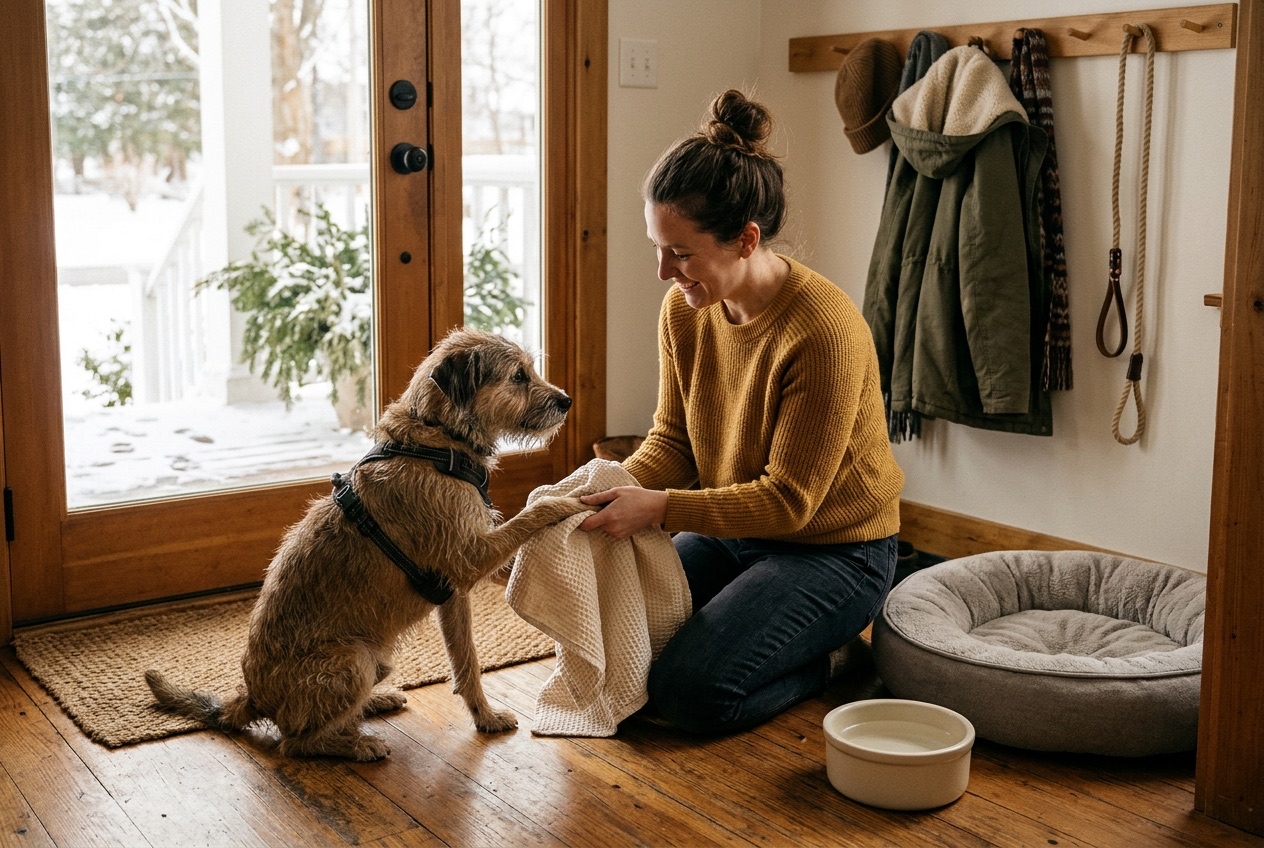
- Wipe every paw at the door: Keep a bowl of lukewarm water and a soft towel by the entryway to rinse between toes and dry thoroughly after every outing.
- Stock pet-safe ice melt at home: Choose salt-free, pet-friendly de-icers on your own steps and driveway.
How Can You Keep Your Pet Active During Cold Weather?
When icy storms shorten outdoor walks, indoor mental workouts prevent cabin fever and boredom behaviors:
- Scent "hide-and-seek" games: Tuck small kibble pieces around a room and cue your dog or cat to sniff them out.
- Puzzle feeders, snuffle mats & wand play: Fifteen minutes of focused foraging or interactive cat-wand chasing satisfies natural instincts indoors.
- Five-minute trick refreshers: Practice reward-based cues like spin, touch, or stay along a carpeted hallway.
What Are the Common Winter Health Risks for Pets?
Veterinarians at community clinics and the Red Cross urge pet parents to know three urgent winter emergencies:
- Ethylene glycol antifreeze poisoning: Sweet-tasting automotive antifreeze causes fatal kidney failure in tiny amounts (even a few licks off a garage floor or driveway puddle). Clean spills immediately, switch to propylene-glycol coolant, and seek emergency veterinary care immediately if exposure is suspected.
- Hypothermia: Violent shivering followed by lethargy, muscle stiffness, pale gums, slow breathing, or clumsiness. Wrap your pet in warm dry blankets and head straight to a vet.
- Frostbite: Affects ear tips, tail, and paw pads first — skin may look pale or bluish-gray and turn red, swollen, or painful as it warms. Warm gradually with lukewarm (never hot) compresses while contacting your veterinarian.
Keep Your Pet Safe During Winter Walks, Senior Care & Holiday Travel
Winter Walk & Identification Safety
More dogs get lost during winter snowstorms than almost any other weather event because snow and ice erase familiar scent trails. Keep your dog leashed away from frozen ponds or creeks (ice thickness is unpredictable), wear reflective gear during early 5 PM sunsets, and ensure your pet wears a corrosion-resistant 304 stainless steel Snootit QR smart tag that won't crack or rust in snow and slush.
Extra Care for Puppies, Kittens, and Senior Pets
Very young and senior pets regulate body heat poorly, and cold damp air flares arthritis stiffness. Put non-slip rugs along slick hallways, clear a snow-free potty patch right outside your door, and ask your vet about joint support before deep winter arrives.
Preparing Your Pet for Winter Travel
Pack a winter car kit with extra blankets, drinking water, a spare leash, medications, and never leave a pet alone in an unheated parked car — vehicles act like refrigerators in freezing temperatures. Before holiday road trips or boarding stays, verify that your pet's Snootit digital profile, microchip link, and emergency contacts are current so anyone can reach you instantly wherever winter takes your family.
Questions & Answers
Frequently Asked Questions
What temperature is too cold for a dog in winter?
For many small, short-coated, puppy, or senior dogs, temperatures below 45°F (7°C) warrant a coat and shorter walks, while temperatures at or below 32°F (0°C) — especially with wind or wet snow — require strict time limits outdoors. Below 20°F (-6°C), all dogs face real risks of frostbite and hypothermia during prolonged exposure.
What is the warmest thing to put in an outdoor dog shelter?
Pets are safest indoors during freezing weather. For working dogs or community cat shelters that need insulated outdoor refuge, elevate the shelter off frozen ground, add a wind flap, and use clean dry straw rather than cotton blankets or towels — blankets absorb moisture and can freeze solid in subzero air.
Do dogs need a blanket or sweater in winter?
Short-haired breeds (like Greyhounds, French Bulldogs, Beagles, and Chihuahuas), puppies, underweight rescue dogs, and arthritic seniors benefit greatly from a dry, well-fitted winter coat outdoors and cozy washable blankets indoors away from floor drafts.
How can I keep my pet warm and safe at night?
Raise pet beds slightly off cold tile or hardwood floors, move sleeping spots away from drafty exterior doors, offer extra washable blankets or self-warming thermal mats, and never leave space heaters or electric human heating pads unattended where pets can chew cords or suffer thermal burns.

