What Essential Supplies Do First-Time Dog Parents Need?
Bringing home your first dog? Use this practical room-by-room new dog owner checklist covering feeding, sleep, walking gear, grooming, health, and smart pet identification.

Bringing your first dog home is unforgettable — and it comes with an intimidatingly long shopping aisle. Beyond food and a soft place to curl up, your new companion needs safe walking gear, coat-appropriate grooming tools, enrichment toys, cleanup supplies, and dependable identification before they ever step through the front door.
Having the right essentials ready ahead of arrival takes the guesswork out of your dog's first weeks at home so you can focus on building trust instead of making late-night supply runs. A well-fitting collar with an ID tag, a registered microchip, and a digital pet profile also add critical protection while your dog learns their new surroundings.
This complete guide breaks down what essential supplies first-time dog parents truly need — plus a practical shopping checklist so you can prepare with confidence without cluttering your home with gear your dog will never touch.
How to Choose the Right Supplies for Your Dog
According to the American Kennel Club, smart preparation starts with matching gear to your specific dog rather than grabbing one-size-fits-all bundles:
- Consider your dog's age: Teething puppies, athletic adults, and arthritic seniors have very different nutritional, bedding, and toy requirements.
- Measure for the right size: Check neck and chest measurements for collars and harnesses, and choose crates and beds where your dog can stand, turn around, and stretch out comfortably.
- Factor in breed and coat type: A double-coated Husky needs different grooming tools than a short-coated Beagle, and power chewers need heavy-duty rubber toys rather than plush seams.
- Prioritize non-toxic, durable build quality: Inspect stitching, clasps, and hardware for loose parts that could become choking hazards.
- Fit your daily routine: Pick machine-washable covers, easy-rinse bowls, and travel gear that match how and where you actually live and walk.
- Start with day-one essentials: Buy core feeding, sleeping, walking, cleanup, and identification gear first — then add specialty toys or accessories once you see your dog's preferences.
Food and Feeding Essentials for Your New Dog
Consistent, measured meals support healthy digestion and help your new dog settle into a predictable household rhythm (see our pet feeding basics guide for portion and food-switching tips):
- Age-appropriate dog food: Choose an AAFCO "complete and balanced" diet formulated for your dog's life stage (puppy growth, adult maintenance, or senior), and transition gradually over 7 days if switching brands.
- Separate food and water bowls: Heavy ceramic or stainless steel bowls resist tipping, won't harbor bacteria in scratches like plastic, and clean easily in the dishwasher.
- Measuring cup or digital kitchen scale: Scooping by eye is a leading cause of accidental overfeeding; measure every meal accurately.
- Airtight food storage container: Keep dry kibble fresh by placing the original bag inside a sealed bin so you retain the lot number, ingredient panel, and expiration date.
- Soft training treats: Pea-sized, high-value treats keep training sessions brisk without exceeding 10% of daily calories.
- Slow-feeder bowl (if needed): Helpful for enthusiastic eaters who gulp meals and swallow excess air.
- Collapsible travel bowl or dog water bottle: Makes hydration effortless on neighborhood walks, park outings, and car rides.
Comfortable Sleeping and Living Essentials
Dogs sleep 12 to 14 hours a day (and puppies up to 18–20 hours), making a calm, draft-free resting zone one of the highest-impact new dog owner essentials:
- Supportive dog bed: Choose dense orthopedic foam for larger or older dogs and bolster edges for dogs who love resting their chin.
- Properly sized crate or playpen: Gives your dog a den-like retreat for decompression and supports safe house training when you can't supervise directly.
- Washable blankets (for non-chewers): Adds cozy warmth and carries comforting household scent; skip loose fabric if your puppy chews or swallows textiles.
- Dedicated feeding station: Place bowls on a non-slip silicone mat in a quiet corner away from foot traffic.
- Removable, machine-washable covers: Zippered waterproof liners and spare covers save hours during muddy seasons and puppyhood accidents.
Walking and Outdoor Safety Supplies
Daily walks build confidence, burn energy, and strengthen your bond — provided your walking kit keeps your dog secure near traffic and distractions:
- Well-fitting flat collar and Y-front harness: You should be able to slide two fingers comfortably beneath the collar; recheck weekly on fast-growing puppies. A front- or back-clip harness protects the trachea if your dog pulls.
- Standard 6-foot non-retractable leash: Offers reliable, tangle-free control on sidewalks and trails (avoid retractable leashes while teaching loose-leash manners).
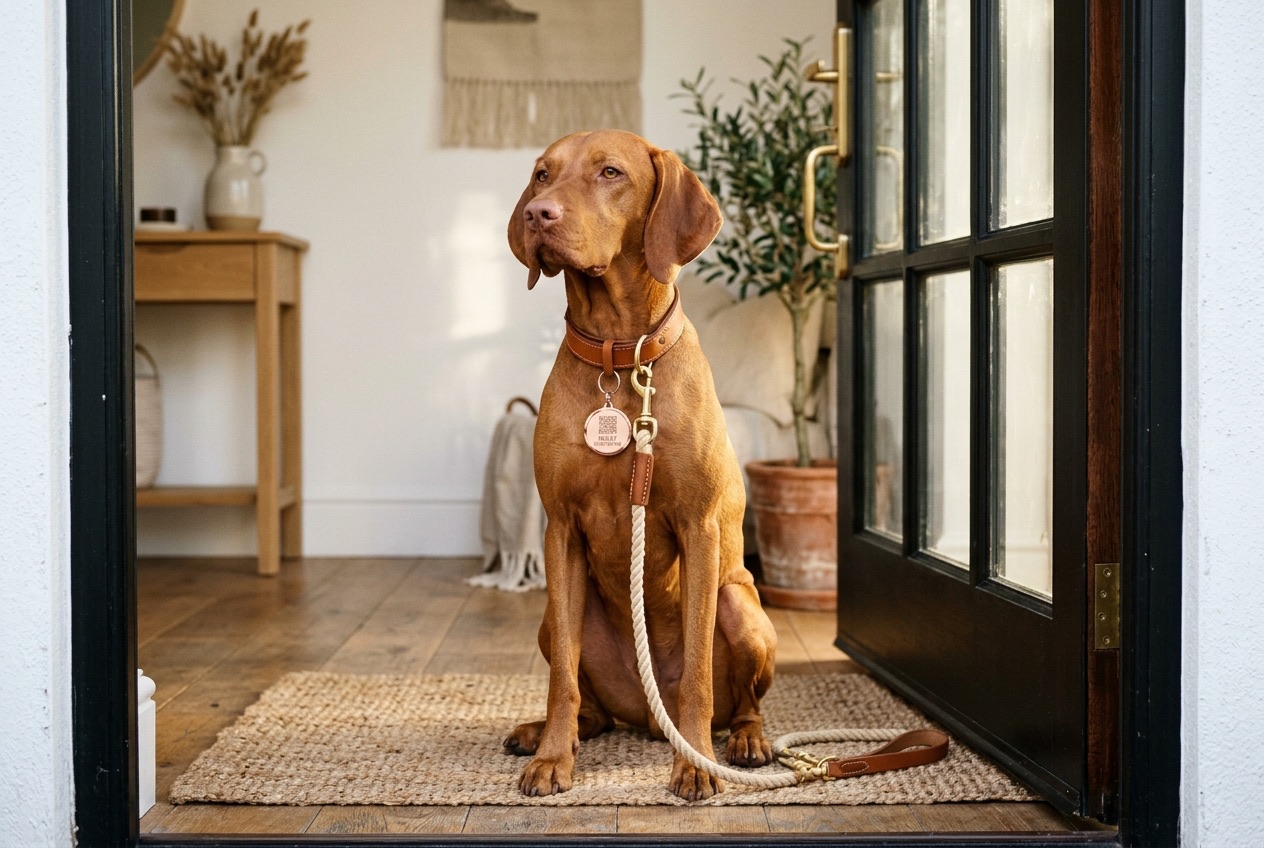
- Durable collar ID tag: Keep visible identification clipped on at all times — even indoors.
- Seasonal paw protection: Pet-safe paw balm or breathable dog boots protect pads against scorching summer asphalt, rough gravel, and winter road salt.
- Reflective trim or clip-on LED light: Makes both of you unmistakable to drivers at dawn and dusk.
Pet Identification and Safety Essentials
The ASPCA emphasizes layered identification for every dog. Combining physical, digital, and biometric layers gives your dog the strongest path home:
- Collar ID tag: Immediate visual proof that your dog belongs to a caring family.
- Microchip registration: Permanent backup identification scannable at veterinary clinics and animal shelters — verify your contact details are active in the registry.
- QR-enabled digital pet ID: A Snootit 304 stainless steel QR tag links directly to your dog's live profile and backup 6-character code, letting any finder reach you without exposing your personal phone number.
- Biometric nose-print recognition: Enrolling your dog's nose print via Snootit's AI biometric ID adds non-invasive identification that cannot fall off.
- Digital health & emergency summary: Keep vaccine dates, medication notes, allergies, and vet contacts ready to share with sitters, boarding staff, or emergency vets.
- Recent clear photos: Maintain up-to-date full-body and close-up photos noting distinctive markings in case you ever need an instant lost-pet flyer.
Grooming and Hygiene Supplies
Starting short, positive at-home grooming sessions early teaches your dog that handling paws, ears, and teeth comes with calm praise and treats. Follow ASPCA grooming guidance when stocking your kit:
- Coat-specific brush or comb: Slicker brushes and undercoat rakes for thick coats; rubber curry brushes for short-haired breeds.
- pH-balanced dog shampoo: Human shampoo disrupts canine skin barriers — always choose a gentle, sulfate-free dog formula.
- Nail clippers or quiet rotary grinder: Keep nails short enough not to click on hard floors, plus styptic powder just in case.
- Canine toothbrush and enzymatic dog toothpaste: Never use human toothpaste (xylitol and fluoride are toxic to dogs).
- Vet-recommended ear cleaner & cotton pads: Clean only the visible outer ear — never insert swabs into the ear canal.
- Unscented pet wipes & microfiber towels: Ideal for muddy paws after rainy walks.
- Vet-prescribed flea, tick, and heartworm prevention: Tailored to your dog's exact age and weight.
Training, Cleaning, Health & Travel Essentials
Training and Enrichment
- Clicker or consistent verbal marker ("Yes!"): Pinpoints the exact moment your dog earns a reward during reward-based training.
- Puzzle feeders, lick mats & Kongs: Channel natural foraging instincts and calm rainy-day restlessness.
- Size-appropriate chew, fetch, and tug toys: Rotate weekly and discard any toy with torn seams or sharp edges.
Cleaning and Potty Training
- Enzymatic pet stain & odor remover: Breaks down microscopic urine proteins so puppies aren't drawn back to the same spot (ordinary household cleaners leave scent markers behind).
- Biodegradable poop bags & leash dispenser: Keep spare rolls by every exit door and in your car.
- Absorbent cloths, pet-safe floor cleaner & lidded waste bin: Blot accidents first rather than scrubbing, and keep curious noses out of the trash.
Health, Emergency & Safe Travel
- Canine first-aid kit: Sterile gauze, non-stick bandage wrap, saline wash, digital pet thermometer, and a tick-removal tool, stored alongside your vet's and nearest 24/7 emergency clinic's numbers.
- Crash-tested car harness or ventilated travel crate: Keeps both your dog and human passengers safe during sudden stops, paired with a pre-packed travel bag holding spare leash, collapsible bowls, medications, and a familiar blanket.
First-Time Dog Parent Shopping Checklist
Use this quick-reference dog supplies checklist to confirm you have every core category covered before pickup day:
| Essential Item | Purpose |
|---|---|
| Life-stage dog food & measuring cup | Delivers complete nutrition in accurate, consistent portions |
| Stainless steel or ceramic bowls | Hygienic, tip-resistant daily food and fresh water stations |
| Crate / playpen & washable dog bed | Creates a calm, secure resting space and supports house training |
| Fitted collar, Y-harness & 6-ft leash | Safe, comfortable control on everyday walks and outings |
| QR-enabled smart pet ID tag | Links finders instantly to your dog's privacy-safe digital profile |
| Grooming brush, dog shampoo & nail trimmers | Maintains healthy skin, coat, and paw comfort between vet visits |
| Soft training treats & puzzle chew toys | Rewards good habits and prevents boredom chewing |
| Enzymatic cleaner & poop bags | Eliminates accident odors indoors and simplifies outdoor cleanup |
| Dog first-aid kit, ear cleaner & tick tool | Handles minor scrapes and routine preventative health checks |
| Secured travel carrier or car restraint | Protects your dog on vet trips and family road journeys |
Prepare Today for a Happier, Safer Life With Your Dog
You don't need every gadget in the pet store on day one — your new dog cares far more about patience, routine, and feeling safe beside you. Pair these foundational supplies with a Snootit QR-enabled digital and biometric pet ID so your dog's identity, vaccination pass, and care instructions travel securely with them wherever life takes you.
Questions & Answers
Frequently Asked Questions
What do I need as a first-time dog mom or dog parent?
Start with complete life-stage dog food, separate food and water bowls, a supportive washable bed, a properly fitted collar and harness, a sturdy 6-foot leash, and an up-to-date ID tag. Add coat-appropriate grooming tools, safe chew toys, enzymatic stain cleaner, poop bags, and basic first-aid supplies.
What is the hardest month for a puppy?
The first month at home is usually the most demanding. Your puppy is adjusting to a brand-new environment, learning house-training routines, waking overnight, and adapting to life away from their mother and littermates. Predictable schedules and gentle patience make a huge difference.
What are the biggest mistakes first-time dog owners make?
Common mistakes include inconsistent house rules, skipping early positive socialization, eyeballing food portions, neglecting tooth brushing, underestimating mental enrichment, and delaying collar ID or microchip registration during the high-risk first weeks.
What are some tips for a first-time dog owner?
Set a steady daily rhythm for meals, potty breaks, walks, and rest. Use reward-based positive reinforcement, book a wellness vet exam in the first week, keep identification and health records current, and build calm one-on-one bonding time every day.

